

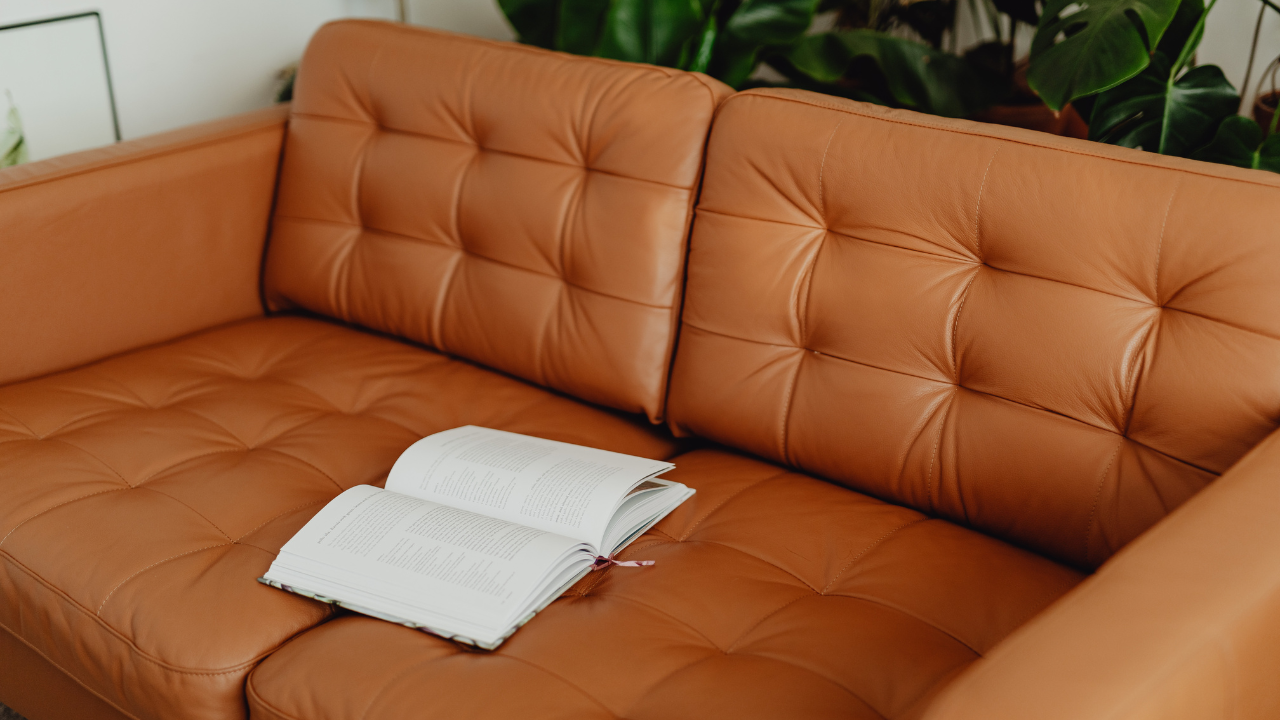
This case study follows a late‑Victorian carved walnut loveseat in Austin’s Westlake, reupholstered in aniline leather and suffering stains, scratches, sagging seat support, color loss, and tarnished brass hardware. Working with a museum‑trained conservator, we used minimum‑intervention, reversible methods to decide when conservation‑grade restoration actually improved net resale proceeds for Westlake and West Lake Hills buyers.
Section 1 – The Piece & the Market Context
The loveseat in this case is an American late‑Victorian/early Edwardian settee, circa 1890–1910, with:
- Frame: carved walnut, mortise‑and‑tenon construction, original shellac‑type finish.
- Upholstery: later (mid‑20th‑century) full‑grain aniline leather, deep button‑tufted back, single bench cushion.
- Support: original coil springs, eight‑way hand‑tied, with replaced webbing.
- Hardware: small brass casters on front legs, steel screws, mixed original and replacement escutcheon pins.
Provenance. The piece was inherited from family in Central Texas, then stored for ~15 years in a non‑climate‑controlled garage. Light DIY attempts included furniture wipes on the leather, a silicone‑heavy polish on the wood, and a patch of hardware‑store leather dye on the front rail.
Condition on intake
- Loose right front leg and slight frame racking when pushed laterally.
- Sagging seat with “hammock” effect and audible spring noise.
- Leather: cat scratches on arms, corner abrasion at front rail, localized color loss, light soil, one water ring on the seat.
- Wood: dull, smeared shellac with water rings on the top rail; small veneer loss on the rear skirt.
- Hardware: brass casters heavily tarnished and uneven; one replaced steel caster.
- Odor: mild mustiness from long storage, no visible mold.
Westlake buyer profile
West Lake Hills and the broader Westlake area are high‑value, design‑driven submarkets. Median property values hover around $1.6–1.9M, several times the national average, and appreciation has been strong over the last decade. Buyers here typically:
- Expect clean, move‑in‑ready furnishings that do not need immediate work.
- Prefer antiques and vintage with visible patina, but not grime, smells, or structural issues.
- Often buy via designers or stagers who filter for pieces that photograph well and can sit next to new, high‑end upholstery.
Current comps (Austin metro, last 12–18 months)
These are representative, not exhaustive, but they anchor the price conversation:
- Antique Victorian carved wood settee, original finish – Facebook Marketplace, Austin: asking ~$495.
- Antique 1790s settee, grape‑motif carving – Lakeway (near Westlake): asking ~$100; decorative but worn.
- Brown vintage Victorian‑style couch + loveseat set – Georgetown: asking ~$250 for the pair.
- American Victorian brass‑inlaid upholstered settee – Austin Auction Gallery, estimate $500–$800, sold in 2025 (hammer not public).
- Adirondack‑style La Lune loveseat – Austin Auction Gallery, estimate $300–$500, sold 2024.
- Fully restored leather Chesterfield‑style loveseats on curated platforms (national, not Austin‑specific) list around $3,000–$3,600.
Takeaway: In the Austin area, an unrestored antique settee often trades in the $100–$600 range, while well‑restored, designer‑ready leather loveseats marketed nationally can clear $2,800–$3,600. Our question: can we bridge that gap without overspending?
Sidebar – Antique vs Vintage vs “Antique‑Style”
Most trade and customs definitions treat 100+ years as the cutoff for “antique” furniture, while vintage is usually 20–99 years old. “Antique‑style” typically means a modern reproduction with period‑inspired details.
For this loveseat, we describe it as:
“Antique late‑Victorian walnut loveseat with later leather upholstery”
That is honest about the antique frame while acknowledging the more recent leather.
Section 2 – Diagnostics & Decision Matrix
Working with a museum‑trained furniture and leather conservator, we performed a structured intake before committing to any treatment.
Structure
- Joints and rails: We checked all corner blocks, rails, and tenons for movement. Only the right front leg and adjacent rail showed notable looseness, likely from being dragged across concrete.
- Webbing and springs: The seat used an eight‑way hand‑tied coil spring system. Ties were partially broken, and webbing had stretched but not failed outright.
- Legs and casters: No splits in the legs. One non‑original caster introduced a slight tilt.
Leather and textiles
- The leather behaved like aniline: visible natural grain, color variation, and no heavy pigment layer.
- Small solvent spot tests indicated a sensitive finish; dyes feathered slightly, suggesting risk of migration if over‑wet. Museum guidelines warn against high‑pH or solvent‑heavy cleaners on such leathers.
Odor and microbes
- Mild mustiness, likely from dust and absorbed odors in the horsehair and jute, but no active mold bloom under magnification. The plan focused on air exchange and adsorbents rather than aggressive chemical deodorizing.
Three strategic paths
- Stabilize & Stage (liquidity‑first)
Minimal spend: make it safe, level, and photogenic for a local sale.
- Conserve & Tone (our chosen path)
Structural stabilization, reversible leather consolidation, subtle toning, wood refresh, hardware clean‑up.
- Refinish/Recover (declined)
Full strip and refinish of wood and full reupholstery in new leather or fabric – value‑negative for this piece unless damage were far worse.
We proceeded with Conserve & Tone because it preserved original fabric of the piece while positioning it for a higher‑end Westlake buyer.
Section 3 – The Conservation Protocol (Step‑by‑Step)
Below is the actual treatment path we used. All materials were chosen for reversibility and compatibility with historic wood, leather, and finishes. PPE, ventilation, and spot‑testing in inconspicuous areas are assumed at every step, especially for pre‑1978 frames where lead‑based coatings may be present.
3.1 Dry soil removal & controlled cleaning
- Vacuuming
- We used a low‑suction HEPA vacuum with a soft brush attachment and a mesh barrier over fragile areas to avoid drawing threads or abrading leather grain. This follows museum guidance for upholstered furniture and textiles.
- Leather surface cleaning
- Small test patches confirmed that a pH‑balanced, water‑based leather cleaner (no alcohol, no ammonia, no abrasives, no saddle soap, no oils) could be used safely in micro‑doses.
- Cleaner was applied on a barely dampened microfiber cloth, working in small sections and immediately blotted dry, always feathering into surrounding areas to avoid tide marks.
- No household wipes or “miracle” oils.
- These often contain high‑pH surfactants, fragrances, and silicones that interfere with future conservation and can embrittle finishes. Industry and museum leather care guidelines explicitly warn against such products.
3.2 Leather stabilization
For aniline leather, the goal is to stabilize and visually calm damage while keeping the natural hand and patina.
- Consolidating abraded grain
On corners and leading edges where grain was breaking, we introduced a flexible acrylic binder in micro‑amounts, wicked into the damaged fibers with a small brush, then burnished once dry. This arrests further flaking but remains reversible with appropriate solvents.
- Micro‑fills for cat scratches
Deep scratches were leveled with a soft, flexible leather fill material, only in the trough of each scratch. No broad skim coats.
Fills were textured to match surrounding grain so they would accept color evenly.
- Selective toning / in‑painting
Color loss was addressed with transparent and semi‑transparent dyes in thin, feathered layers, aiming to re‑establish continuity rather than create a new uniform color.
We avoided any blanket spray recolor. Those can look plastic, obscure grain, and age poorly – and are very difficult to reverse without stripping the leather.
- When full recolor makes sense
For heavily pigmented, non‑absorbent leathers with severe coating failure, a full recolor can be rational. That was not the case here; the aniline surface and intact patina argued for restraint.
3.3 Seat support & comfort
- Re‑webbing and spring work
- The jute webbing under the springs was replaced like‑for‑like, with webbing tacked in a traditional lattice pattern using blued upholstery tacks.
- Existing coil springs were re‑tied in an eight‑way pattern using strong, reversible cord, matching original tie points where possible. This maintains historic integrity while restoring seat geometry.
- Cushion strategy
- Original horsehair and cotton batting were retained where clean and resilient.
- To meet Westlake comfort expectations, we added a wrapped foam insert inside the cushion cover, sized so the foam is removable without altering original stuffing.
- This non‑destructive insert provides contemporary comfort but can be removed by a future conservator or purist buyer.
Stripping and aggressive sanding erase tool marks and patina that help date the piece and differentiate it from reproductions. For antiques, shellac‑based repairs and French polishing usually preserve more value than starting over with modern lacquer or polyurethane.
3.4 Odor & hygiene
- Air exchange and adsorbents
The loveseat spent several days in a ventilated area with activated carbon and zeolite nearby to adsorb VOCs and odors.
- Targeted microbial control
Interior dust and any suspected microbial hotspots on the deck were treated with a mild, non‑residual antimicrobial suitable for museum environments, applied only after testing for dye fastness.
- No ozone blasting
We avoided in‑home ozone machines. Environmental agencies warn that ozone can damage materials (rubber, fabrics, coatings) and create by‑products, and conservation professionals caution against home ozone units for furnishings.
3.5 Geometry & presentation
- Frame racking was corrected when the front leg joint was re‑glued and glue blocks were added.
- Casters were leveled, and the seat crown was rebuilt so the silhouette presents as visibly supportive but not over‑stuffed.
- Final sheen was harmonized: matte‑to‑satin on the leather, low‑sheen French polish on the walnut, and softly bright hardware.
3.6 Documentation & Quality Control
All conservation work on this loveseat was performed in partnership with Leather Repair Gallery, whose museum-trained conservators handled the structural stabilization, leather consolidation, wood finish recovery, and hardware treatment described above. As part of the final stage, Leather Repair Gallery produced a full documentation package: before-and-after macro photography of seams, grain, and finish; raking-light images showing toning and shellac work; a materials and methods log emphasizing reversibility; and a concise care sheet for the eventual buyer. This documentation not only preserves treatment transparency but also supports resale value for Westlake designers and collectors who expect professional conservation records.
- Before/after macro photos of corners, seams, grain, and finish.
- Raking‑light images showing fill and polish work.
- A treatment log listing material classes and areas, emphasizing reversibility.
- A care sheet with what to do – and what not to do.
This documentation supports resale value by giving future owners and appraisers a paper trail.
Section 4 – Costs, Timeline, and Westlake Resale ROI
Cost bands (Austin / Westlake, typical independent rates)
These are indicative ranges for similar projects in the Austin metro:
- Structural stabilization (joints, webbing, spring re‑tie):
~$350–$850 depending on access and complexity.
- Leather consolidation, fills, and selective toning:
~$450–$1,200 depending on coverage and severity.
- Wood and finish touch‑ins (no full strip):
~$300–$900.
- Hardware cleaning / minor replacement:
~$120–$350 (excl. replating).
- Odor mitigation and hygiene:
~$120–$300.
- Staging‑grade photography:
~$150–$350 for a 10–12‑image set.
- Local pickup/delivery (Westlake / central Austin):
~$150–$300 round trip for a loveseat with two‑person handling.
Our total conservation invoice for this loveseat landed near the middle: ~$1,250 all‑in (excluding resale fees).
Typical turnaround
- Queue time: 2–4 weeks to get on the conservator’s bench.
- Bench time & curing: 1–2 weeks, depending on drying/curing windows for shellac and adhesives.
- Total project window: roughly 4–8 weeks from first inquiry to “ready to list.”
Two ROI scenarios (with real‑world math)
We modeled two paths using local comps and our eventual sale outcome.
Scenario 1 – Liquidity‑first (sell as‑is)
- Likely as‑is list price on Facebook Marketplace / local buy‑sell groups, given condition: $250–$450 based on similar antique settees in the Austin area.
- Assume mid‑point sale: $350, no platform fees, buyer pickup.
- Minor DIY cleaning / time costs: say $25 equivalent.
- Net proceeds: ≈ $325.
- Days to sell: 7–30 days is typical for attractive low‑priced seating in Austin.
Scenario 2 – Max‑finish (conserve & tone, as executed)
- Conservation & staging cost: ~$1,250.
- We targeted Westlake buyers and designers, plus national interest via an online curated platform, using designer‑grade photos.
- Based on curated comps at ~$3,000–$3,600 for restored leather loveseats, we priced aggressively at $2,250 to trade faster while still reflecting the conservation work.
- Final accepted offer: $2,100 from a Westlake buyer via a designer.
- Designer commission: 12% (~$252).
- White‑glove local delivery subsidy: $175.
- Net after sale and logistics (before restoration costs):
- $2,100 − $252 − $175 ≈ $1,673.
- Net after restoration costs: $1,673 − $1,250 ≈ $423.
- Incremental gain vs as‑is: $423 − $325 = $98.
- ROI on restoration spend:
- $98 ÷ $1,250 ≈ 7.8%.
- Days to sell: 18 days from listing to funds received.
What this shows:
- Conservation‑grade work did increase net proceeds, but not dramatically.
- Most of the financial justification came from:
- Consolidating structural and cosmetic risk for a demanding buyer.
- Targeting a higher‑value Westlake audience that cares about provenance and conservation.
If this had been a more ordinary piece (e.g., generic reproduction loveseat), the same spend would almost certainly have produced negative ROI.
Section 5 – Staging & Listing for Westlake Buyers
Photography
- Shoot in soft natural light, ideally near a large window with sheer filtering.
- Use a neutral backdrop – white, warm gray, or pale plaster walls are ideal for Westlake homes.
- Deliver 10–12 frames:
- Front, back, and both three‑quarter views.
- Side profile to show depth and arms.
- Seat and back close‑ups.
- Macro shots of conserved leather, repaired joints, and hardware.
- Underside showing webbing and springs (buyers and designers love this).
Listing copy
Lead with structure and comfort:
“Tight frame, re‑webbed springs, supportive seat, no wobble.”
Then describe conservation in plain language, avoiding chemical jargon, for example:
- “Leather cleaned with pH‑balanced solutions, minor scratches stabilized and lightly toned.”
- “Original shellac finish refreshed with traditional French‑polish methods; not stripped.”
- “Brass casters cleaned and leveled; one historically sympathetic replacement.”
Be explicit about limits:
- Note remaining wear, faint rings, or patina that was intentionally preserved.
- Mention that treatments are reversible, which reassures serious buyers and appraisers.
Styling
- Use one or two neutral pillows or a light throw to signal compatibility with transitional and modern interiors, common in Westlake listings.
- Avoid heavy period staging (no full Victorian vignette); instead, pair with a clean modern side table or a contemporary artwork to show versatility.
Logistics
Offer (or coordinate) white‑glove local delivery, including stairs and tight entries, and state the maximum width / depth for doorways.
For national buyers, provide packed dimensions, weight, and recommended shippers upfront.
Section 6 – Aftercare for the Next Owner
Placement & microclimate
- Keep the loveseat out of direct sun and away from intense window glare. UV and heat can soften shellac and fade leather dyes.
- Avoid placing it directly over HVAC vents or next to fireplaces, which dry out leather and stress joints.
- Aim for stable indoor humidity; avoid attic or garage storage.
Monthly care
- Dust wood and leather with a clean, dry, lint‑free cloth.
- Lightly vacuum seams and crevices with a soft brush and low suction to remove dust that can abrade fibers over time.
- Rotate loose cushions, if present, to even out wear.
Do not:
- Use saddle soap, oils, furniture polish, glass cleaner, or high‑pH household sprays on the leather.
- Wax French‑polished surfaces; many professional guides note wax can cause streaking and complicate future repairs.
Spill response
- Blot spills immediately with an absorbent cloth; do not rub.
- For water‑based spills on aniline leather, feather a small amount of distilled water at the edges only if needed, then allow to air dry.
- For complex stains, stop and consult a conservator rather than stacking home remedies.
Early, light‑touch interventions are cheaper, more reversible, and better for long‑term value than major rescues every decade.