

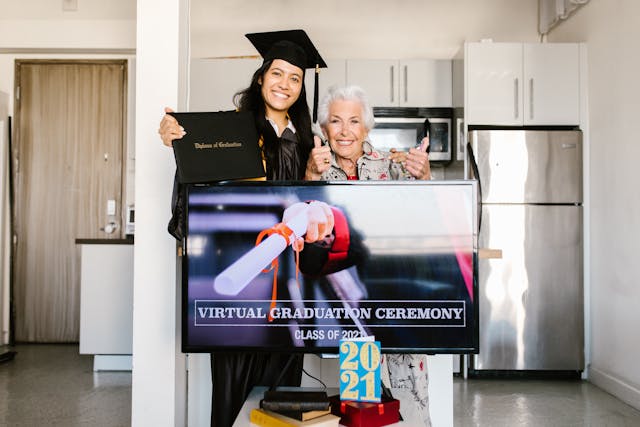
The landscape of graduate education is evolving rapidly, influenced by technological advancements, shifting workforce demands, and the growing need for flexible learning options. As more professionals seek to advance their careers without pausing their work or personal commitments, online platforms are increasingly central to delivering high-quality graduate programs. From interactive course materials to virtual collaboration tools, these innovations are reshaping how students engage with their studies and with each other. The rise of specialized programs, such as an online M.Ed. program, highlights the expanding opportunities for educators to enhance their expertise while balancing other responsibilities.
In addition to accessibility, emerging trends in online graduate education emphasize personalization and practical skill development. Adaptive learning technologies, data-driven feedback, and interdisciplinary coursework allow students to tailor their educational experiences to their individual goals and career trajectories. Moreover, integrating real-world projects and experiential learning in virtual environments ensures that graduates are well-prepared to apply their knowledge in professional settings. As these trends continue to develop, online graduate education is positioned to offer increasingly dynamic, flexible, and impactful learning experiences for a diverse range of students.
Artificial Intelligence Enhancing Personalized Learning
Artificial Intelligence (AI) is revolutionizing online graduate education by customizing learning experiences. Through machine learning, universities create platforms that tailor curricula and assessments to each student. Adaptive systems analyze data to suggest resources, modify pacing, and provide targeted feedback, supporting both struggling and advanced learners. AI chatbots and virtual assistants deliver instant responses, solve issues, and send study reminders, keeping students motivated. These advancements improve learning environments, lessen routine administrative work for instructors, and promote student success. AI also forecasts student outcomes, detects at-risk students early, and offers analytics to improve courses. This personalization boosts retention and mastery, making graduate education more inclusive and supportive of students from diverse backgrounds and with varied goals.
Immersive Learning Through VR and AR
Online learning is no longer limited to static content or recorded lectures. Thanks to virtual reality (VR) and augmented reality (AR), graduate students can step inside simulated labs, engage in interactive case studies, or visualize complex scenarios from anywhere in the world. For example, medical students may practice diagnosing conditions using VR patients, while engineers manipulate virtual models of machinery that would otherwise be inaccessible. These immersive tools deepen understanding by fostering experiential learning, one of the most effective methods for long-term retention and skill application. Reports show that the adoption of VR and AR in the education sector is projected to grow exponentially, further enhancing engagement and outcomes.
Beyond technical training, VR and AR can help replicate soft skills, such as leadership, communication, and conflict resolution, in controlled, realistic environments that traditional online formats struggle to provide. This innovative approach transforms how concepts are taught and can provide equitable access to lab experiences or fieldwork, reducing disparities between online and in-person learners. As technology continues to evolve, the possibilities for immersive, transformative educational experiences will only expand, offering customized solutions for different fields and learner needs.
Micro-Credentials and Modular Learning
As professionals seek quick ways to update their skills without committing to lengthy degrees, universities are offering microcredentials and modular courses. These concise, focused programs target skills such as research, design, or digital literacy. Modular learning allows students to accumulate credentials towards a full degree, helping them stay flexible in a shifting job market. Micro-credentials are appreciated by employers for their transferability and practical value. Online formats enhance microlearning’s convenience, fitting into busy routines. Besides supporting career mobility, micro-credentials offer proof of specialized skills that attract hiring managers. Many institutions collaborate with industry leaders to ensure that curricula are relevant and that credentials are recognized in the workforce. For graduate students, these options enable exploration of interests or career shifts without the extensive time and risks associated with traditional degrees.
Hybrid and Blended Learning Models
The convergence of in-person and virtual environments is redefining graduate education. Hybrid and blended learning programs offer the flexibility of online modules paired with occasional face-to-face sessions, networking events, or collaborative projects. This model capitalizes on the strengths of both approaches, offering convenience and accessibility while preserving the rich interpersonal dynamics of traditional learning. Recent studies show that students in hybrid programs report higher satisfaction, greater engagement, and better academic outcomes than those in fully online or fully on-campus programs.
These models also allow for varied instructional methods, including problem-based learning, peer mentoring, and hands-on experience that could be missed in a fully remote format. Many institutions are investing in developing physical campuses and digital spaces that are seamlessly connected, building a sense of belonging and community for remote students. Over time, the balance between digital and face-to-face will likely become a signature feature of cutting-edge graduate programs.
Global Collaboration and Cross-Cultural Learning
The digital transformation of graduate education has dismantled geographical barriers, bringing together students from various backgrounds and continents in virtual classrooms. These spaces encourage discourse across cultures, introduce a wide range of perspectives, and prepare students to work on global teams. Collaborative online projects, discussion boards, and multicultural group assignments not only enhance academic learning but also foster crucial workplace skills, such as cultural competency, communication, and adaptability. As graduate programs expand their reach, the value of global networking and shared knowledge becomes an indispensable part of the educational journey.
Engaging with peers from diverse backgrounds allows graduate students to challenge their assumptions and gain insights into international standards, legal frameworks, and industry practices. In an era where many careers span national borders, cross-cultural competence has become a top attribute for modern professionals. Thus, online programs that promote authentic global interaction are positioning their graduates for success in an increasingly interconnected workforce.
Conclusion
The trajectory of online graduate education is clear: technology and innovation will continue to reshape how, where, and what we learn. By integrating AI for personalization, utilizing immersive technologies, offering flexible micro-credentials, adopting hybrid models, and promoting global collaboration, universities empower students to thrive in a dynamic, highly connected workforce. Institutions and learners who embrace these trends will enjoy greater engagement, improved learning outcomes, and greater preparedness for future challenges and opportunities. Ultimately, online graduate programs that adapt to these advances stand to become leaders in shaping the educational experiences of tomorrow.