

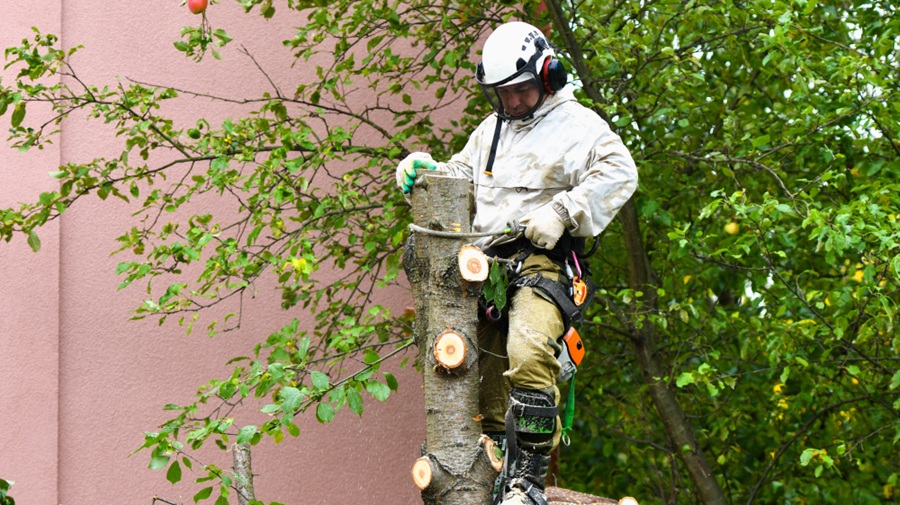
Key Takeaways
- Not every damaged tree needs to be removed, but certain warning signs call for a prompt professional assessment.
- Trees near homes, roads, fences, and overhead lines require extra caution because the available fall zone may be limited.
- Property preparation should include clearing access, moving vehicles, identifying obstacles, and keeping people and pets away from the work area.
- A written estimate should clarify the removal method, cleanup, hauling, stump options, and insurance coverage.
- Chainsaw use poses a significant risk of injury, particularly when people cut storm-damaged or tensioned wood without appropriate training and protective equipment.
In Fuquay-Varina, a mature tree can add welcome shade and character to a yard, but a damaged, declining, or poorly placed tree can also threaten a roof, driveway, fence, or nearby utility service. Before arranging tree removal, homeowners should take time to assess the visible risks, prepare the property, and understand when the job calls for trained help.
Tree work is not simply a matter of starting a chainsaw. Height, uneven weight, wind, hidden decay, root damage, and limited space can all affect how a tree or branch moves. A careful plan before removal day can help reduce injuries, delays, and avoidable property damage.
Why Tree Removal Requires More Than a Chainsaw
A tree that appears straightforward from the ground may have a hollow trunk, cracked union, weakened roots, or heavy limbs concentrated on one side. For example, a leaning pine tree located between a house, driveway, and backyard fence has few safe options if it shifts unexpectedly. Even a small error in judging the tree’s weight or fall path can have serious consequences.
In many cases, tree trimming may address a limited concern without removing the whole tree. Proper pruning can remove dead limbs, improve clearance from a roof or structure, and reduce branch-to-branch rubbing. It is not a substitute for removal when the trunk, roots, or overall structure are failing.
Step One: Inspect the Tree From a Safe Distance
Homeowners can perform a basic visual check without climbing, cutting, or pulling on branches. Walk around the tree from a safe distance and look for changes that may indicate a developing problem.
- A lean that is new or becoming more pronounced.
- Large dead, broken, or hanging branches.
- Deep cracks, cavities, loose bark, or splits in the trunk.
- Mushrooms, soft wood, or decay near the base.
- Exposed, lifted, severed, or damaged roots.
- Fresh storm damage after high winds, heavy rain, ice, or lightning.
- Branches touching a roof, chimney, fence, or overhead utility line.
A visual inspection cannot reveal every internal problem. A tall tree, a tree with storm damage, or one close to a structure should be evaluated before anyone attempts cutting.
When Trimming May Be Enough
Removal is not always the least risky or most practical answer. If the trunk and roots are sound, selective pruning may be appropriate for dead limbs, branches rubbing on a roof or gutter, and lower branches interfering with normal yard use. Avoid topping a tree or randomly removing major healthy limbs. Large cuts can change how a tree carries weight and may create new decay points.
Red Flags That May Point to Full Removal
- A deep trunk split, major cavity, or obvious advanced decay.
- A tree leaning toward a home, road, play area, or power line.
- Repeated shedding of large dead branches.
- Roots disturbed by construction, erosion, or a recent uprooting event.
- A partially fallen tree or limbs caught under tension after a storm.
- Severe damage that leaves too little stable structure to retain safely.
- A tree that conflicts with planned construction and cannot reasonably be preserved.
Step Two: Check Rules and Utility Concerns
Before scheduling work, check whether town, county, neighborhood, or homeowners association requirements apply to the property. Rules can differ for trees in public rights-of-way, trees connected to development activity, and trees on private residential lots.
Power lines should always be treated as energized. Do not cut, climb, or pull a tree that could contact an overhead line. If stump grinding, root removal, or new planting will involve digging, contacting North Carolina 811 before excavation helps identify publicly owned underground utility lines. The process requires advance notice, so do not leave it until the day work is planned.
Step Three: Prepare the Property Before Removal Day
- Move cars, trailers, grills, toys, patio furniture, and lawn equipment.
- Keep children and pets indoors and outside the work zone.
- Clear access from the street or driveway to the tree.
- Point out sprinklers, septic components, drains, invisible fences, and delicate landscaping.
- Close nearby windows and doors.
- Notify neighbors if equipment, falling debris, or access could affect shared spaces.
- Confirm where logs, wood chips, branches, and stump debris will be placed or hauled.
How to Choose a Tree Removal Professional
Compare more than the starting price. Ask for a written estimate that identifies the tree or limbs involved, the intended scope of work, cleanup expectations, and whether stump grinding is included. Request proof of current liability insurance and workers’ compensation coverage, and ask how the crew plans to protect nearby structures and landscaping.
Experience matters most when a tree is close to a house, fence, road, or utility line. The lowest estimate may exclude hauling, debris removal, stump work, or protection measures that another estimate includes.
What Homeowners Should Never Do
- Cut a tree that could reach a power line.
- Use a ladder while operating a chainsaw.
- Stand beneath hanging limbs or a partially fallen tree.
- Work alone on a large, leaning, or unstable tree.
- Pull down a lodged tree without a controlled plan.
- Allow children, pets, or bystanders into the work area.
The CDC notes that approximately 36,000 people receive emergency department treatment for chainsaw injuries each year. Its chainsaw safety guidance also cautions against contact with power lines and explains why bent or trapped branches can release suddenly with dangerous force.
After the Tree Comes Down
Inspect the work area before returning to normal yard use. Look for small branches, torn turf, exposed holes, damaged plants, and debris in gutters or along roof edges. Confirm whether the stump will remain, be ground below grade, or be removed completely. If planting a replacement, choose a location with enough room for the species’ mature canopy and root system.
Common Questions About Tree Removal
Can a homeowner remove a small tree?
Size is only one consideration. Lean, species, weather, nearby obstacles, overhead lines, and the operator’s skill all affect the level of risk.
Should a storm-damaged tree be removed immediately?
Storm damage should be assessed promptly, but homeowners should not cut branches that are bent, lodged, or under visible tension. Those limbs can move unexpectedly when released.
Is stump grinding always necessary?
No. The choice depends on future landscaping, trip hazards, access needs, pest concerns, and whether the space will be replanted or built upon.
Conclusion
Safe tree removal in Fuquay-Varina starts well before equipment arrives. A careful inspection, a review of local requirements, a clear work plan, and a prepared property can make the project safer for the household, neighbors, and surrounding structures. When a tree is large, unstable, storm-damaged, or near an obstacle, a professional assessment is the prudent next step.