

Key Takeaways
- A home’s list price is only part of its real cost.
- St. Louis neighborhoods and nearby communities can differ dramatically in housing style, services, commute patterns, and local rules.
- Personal visits, inspections, and current local information are essential before making an offer.
- The best fit is usually the area that supports your everyday routine and future plans, not simply the largest house in the budget.
Buying a home means choosing more than bedrooms, finishes, and a street address. The neighborhood affects your daily drive, access to errands, long-term costs, and how comfortably the property fits your life. Buyers reviewing homes for sale in St. Louis, MO can use Demaggio Partners’ home-search page as a practical starting point for comparing residential listings across St. Louis and nearby communities. Demaggio Partners is a St. Louis-area real estate team with local listing coverage that helps buyers see how property options vary across city neighborhoods and communities such as Webster Groves, Kirkwood, Crestwood, and beyond.
A thoughtful comparison process can keep a promising showing from becoming a rushed decision. Before narrowing your search, identify what will matter on a normal Tuesday morning, a busy Saturday afternoon, and several years after closing.
Start With the Lifestyle That Fits Daily Life
Write down the routines that shape your week before comparing neighborhoods. Consider work locations, school or childcare needs, visits with family, grocery trips, restaurants, medical care, parks, fitness, and hobbies. A larger home may not be the better value if it adds substantial travel time or makes everyday errands harder.
For example, a buyer who works near downtown and regularly sees family in the central corridor may prefer a smaller home near key routes over a larger property farther away. The right answer is personal, but defining priorities early makes it easier to filter listings with confidence.
Compare City Neighborhoods and Nearby Communities
St. Louis city neighborhoods and nearby county communities can offer very different living experiences. Street patterns, lot sizes, home ages, municipal services, parking, property taxes, and local regulations may all change within a short drive. The City of St. Louis includes 79 distinct neighborhoods, and the city’s official St. Louis neighborhood profiles can serve as a useful starting point for understanding their boundaries and characteristics.
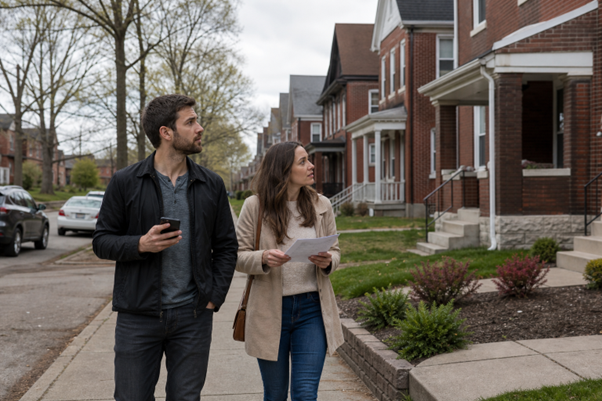
Do not form an opinion about an entire area from one block, one open house, or one listing photo. Drive several routes, walk nearby streets when practical, and look at the surrounding properties. A neighborhood can vary considerably from one section to another.
Build a Realistic Housing Budget
Your mortgage payment is important, but it is not the full monthly cost of ownership. Compare likely expenses for each property, including:
- Property taxes and homeowners insurance
- Utilities, especially in larger or older homes
- Routine maintenance, repairs, and seasonal upkeep
- Homeowners association dues, where applicable
- Parking, tolls, fuel, transit, or other commuting costs
Review homes by total monthly cost rather than list price alone. Local demographic and housing context can also be useful when evaluating an area, and the U.S. Census Bureau’s St. Louis data is one resource for broader city-level information. Current tax figures, insurance quotes, and utility estimates should still be confirmed for the specific property.
Study Housing Stock and Property Condition
The St. Louis area includes historic brick homes, renovated houses, condos, townhomes, newer construction, and larger suburban properties. Each type can have different maintenance demands. In older homes, pay close attention to the roof, foundation, drainage, plumbing, electrical systems, windows, insulation, and heating and cooling equipment.
Attractive kitchens and fresh paint should not overshadow structural or mechanical concerns. Ask what major work has been completed, when it was done, and whether permits were obtained when required. A professional inspection can clarify which issues are routine and which may affect the budget or negotiating strategy.
Test the Commute and Everyday Access
Map routes, then test them at the times you would actually travel. A midday drive may not reveal morning congestion, school traffic, evening bottlenecks, road work, or event-related delays. Consider access to major roads, public transit, bike routes, sidewalks, and alternate routes during bad weather.
Also, check how easily you can reach the places you use regularly. Parks, libraries, grocery stores, pharmacies, restaurants, medical offices, and community centers add value when they fit real habits. A nearby amenity only matters if you are likely to use it.
Look Beyond School Ratings and Broad Labels
School decisions involve more than one online score. Verify district boundaries, enrollment policies, transportation, special programs, and any application requirements directly with the relevant district. Boundaries can differ by street and may change over time, so listing remarks should never be the final source.
When considering safety and property risk, avoid broad conclusions about an entire neighborhood. Review public information, visit at different times of day, speak with residents when appropriate, and observe the immediate surroundings. Check flood exposure, drainage, storm damage history, vacant properties, and insurance availability. An inspection and insurance quote can reveal concerns that are not obvious during a showing.
Compare Future Fit and Resale Factors
No neighborhood can guarantee future appreciation. Still, practical layouts, well-maintained streets, transportation access, nearby services, and sound renovation quality may support a property’s future appeal. Balance those considerations with your present needs. A home that is affordable, functional, and enjoyable to live in is often a better choice than one purchased primarily for a projected return.
Use a Simple Neighborhood Scorecard
Compare three to five areas using the same 1-to-5 scoring system. Keep notes after each visit so early impressions do not blur together.
- Budget: Does the full monthly cost fit comfortably?
- Commute: Is travel time reasonable during a normal workweek?
- Home style: Does the area offer the size, condition, and layout you want?
- Daily services: Are errands, recreation, and care providers convenient?
- Future fit: Will the location still work if household needs change?
Questions to Ask Before Making an Offer
- What have similar homes nearby sold for recently?
- How long do comparable properties typically stay on the market?
- Are there known drainage, foundation, road, or renovation concerns?
- What are the estimated taxes, insurance costs, and expected maintenance needs?
- Are major developments or road projects planned nearby?
- Does the home fall within the preferred school and service boundaries?
- What features could make the property harder to sell later?
A local real estate professional can help compare current listings, recent sales, taxes, inspection concerns, and meaningful differences between nearby areas. Ask for neighborhood-level context rather than relying on metro-wide averages. Compare the numbers, visit the area, inspect the home, and choose the neighborhood that supports both present comfort and future flexibility.