

Keeping your car in pristine condition isn’t just about pride—it can also protect your investment for years to come. For car owners looking to shield their vehicles from the hazards of daily driving, two standout solutions are Paint Protection Film (PPF) and ceramic coating. While they both serve to safeguard your vehicle’s exterior, their methods and benefits differ significantly. For those who want to learn about ceramic coating for cars in Louisville, KY, understanding these differences can help you make an informed decision that best fits your needs.
Both PPF and ceramic coating are designed to maintain your car’s appearance and value, but choosing between them often comes down to what kind of protection is most important for your lifestyle—physical or chemical. Below, we break down the specifics of each option, so you can find the best fit, whether you’re considering a do-it-yourself approach or seeking professional help in your area.
Understanding Paint Protection Film (PPF)
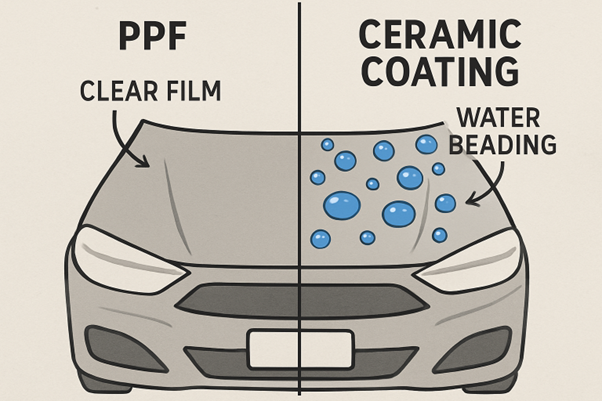
PPF, or paint protection film, is a durable thermoplastic urethane layer that adheres to the painted surfaces of vehicles, protecting against physical threats like rocks, road debris, and insect residues, as well as minor dings. It is highly regarded for its self-healing abilities, allowing small imperfections to vanish when exposed to heat from sunlight or warm water. Commonly applied in high-impact regions, including bumpers, hoods, side mirrors, and fenders, professional installation ensures that the film offers seamless and nearly invisible protection. The film’s transparent and flexible nature, coupled with its resistance to wear, makes it a favored choice. Additionally, many premium PPFs are equipped with UV inhibitors, which safeguard the underlying paint from sun damage and oxidation, enhancing the longevity of the vehicle’s paintwork.
Exploring Ceramic Coating
Ceramic coating is a clear, liquid polymer that chemically bonds with the vehicle’s factory paint, forming a protective, ultra-thin layer. This hydrophobic, or water-repelling, barrier causes rainwater and contaminants to bead up and roll off the surface, reducing water spots and making cleaning effortless. Ceramic coatings excel at providing resistance against chemical stains from bird droppings, tree sap, bug splatter, and acidic rain—all common threats to automotive paint. For car owners researching ceramic options, looking into automotive ceramic coating near me is a great way to find reputable installers in their area.
Besides improved protection, ceramic coatings are prized for the striking gloss they create. This high-gloss finish intensifies the vehicle’s color and creates a deep, wet-look shine—qualities that appeal to anyone who values a showroom finish year-round. While ceramics won’t prevent dings or rock chips, they do reduce the likelihood of swirl marks and light scratches caused by improper washing techniques.
Comparing Durability and Longevity
In terms of durability, PPF tends to outlast ceramic coatings. High-grade PPF can endure up to 10 years or more with proper care, and is often backed by warranties. Its capacity to withstand physical impacts without yellowing or peeling makes it a favorite among those who log lots of highway miles or drive in challenging conditions. A professionally installed film can be a wise long-term investment.
Ceramic coatings typically last from two to five years, contingent on product quality and maintenance. Environmental stressors, such as sun exposure, pollution, and the frequency of washing, also impact longevity. Over time, the effectiveness may wane, and reapplication or top-off treatments might be necessary to maintain the hydrophobic and chemical-resistant qualities.
Cost Considerations
Cost is vital for car owners choosing between products. Paint Protection Film (PPF) costs more due to pricier materials and complex, professional installation on 3D panels. Though costly upfront, it saves on future paint repairs. Ceramic coatings are cheaper initially but may be costly over time with reapplications, though they offer a durable, glossy finish and easier upkeep without full-body coverage.
Maintenance and Aesthetic Impact
PPF is low-maintenance, requiring just regular washing with gentle shampoos and microfiber towels. Avoid using abrasive chemicals or tools that could damage the film or hinder its self-healing properties. Its clear nature maintains your vehicle’s color and finish without blemishes or cloudiness. Ceramic coatings make washing easier by repelling dirt and water, helping to keep surfaces cleaner between washes and making them easier to clean of bird droppings or sap. They also enhance shine and depth, giving a rich, attractive appearance that both enthusiasts and casual observers appreciate.
Combining PPF and Ceramic Coating for Ultimate Protection
For car owners who won’t compromise on protection or appearance, applying both PPF and ceramic coating offers the ultimate solution. Often, PPF is placed on the most vulnerable sections—particularly the front end—while the entire exterior is finished with a ceramic coating. This ensures all areas are guarded from both impacts and chemical threats, and you benefit from the easy maintenance and show-stopping gloss of a ceramic finish. This approach is popular among luxury vehicle owners and anyone seeking long-term value retention for their ride.
Making the Right Choice for Your Vehicle
Choosing between PPF and ceramic coating depends on your driving habits, preferences, and goals. PPF is ideal for highway driving and rock chip protection, while ceramic offers a glossy, easy-to-clean finish. Combining both provides maximum, long-lasting protection. Staying informed helps keep your car looking its best for years to come. With options for every driver, now’s a great time to invest in paint protection.
Conclusion
In conclusion, ceramic coating offers car owners an effective way to protect their vehicle’s paint while enhancing its appearance with a glossy, showroom-quality finish. Its hydrophobic and chemical-resistant properties make maintenance easier and reduce the risk of damage from environmental contaminants. While durability may be shorter than that of paint protection film, ceramic coatings remain a popular choice for those seeking both aesthetic appeal and convenience. Ultimately, whether used alone or in combination with PPF, ceramic coatings provide a valuable investment in preserving a vehicle’s beauty, longevity, and overall value.