

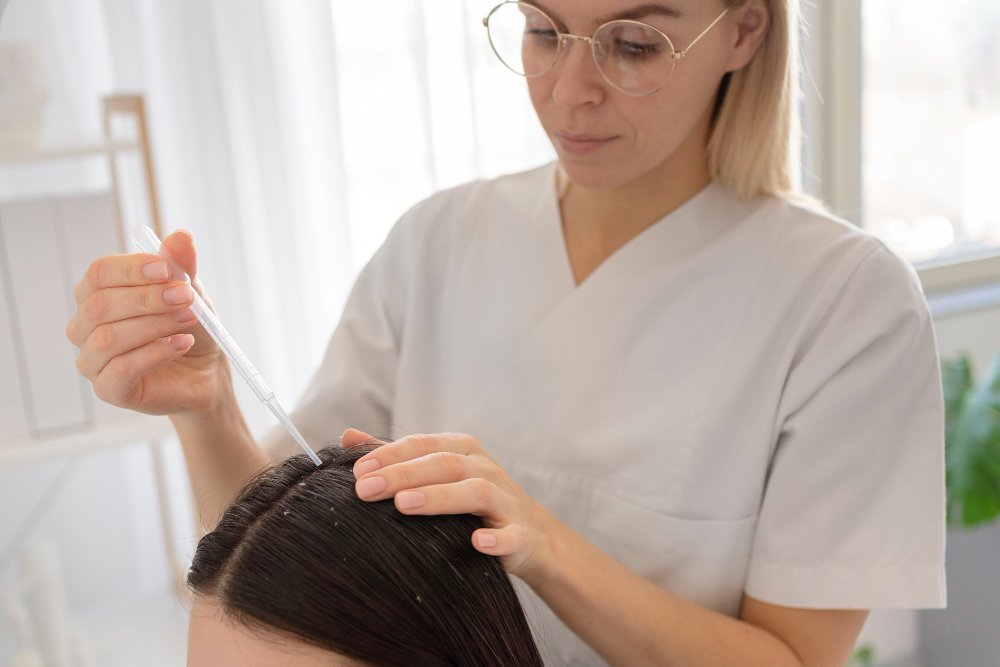
Hair thinning is a tricky issue to deal with, especially when the cause is not immediately apparent. Hair density can change slowly in women, perhaps with a widening part, less volume, or more hair falling out.
Men are often associated with hair loss, but one-third of women experience it at some point in their lives. Some notice changes in their 30s. Contributing factors may include hormonal changes, stress, thyroid problems, and iron deficiency, and the rising use of GLP-1 weight-loss drugs is another consideration.
As targeted hair treatments grow, regenerative ingredients are gaining attention. One option is Calecim Professional’s Advanced Hair System, an at-home treatment that employs stem cell-derived technology.
How Calecim Stem Cell Serum Works
The treatment relies on PTT-6®, a proprietary ingredient developed using stem cell technology. It contains over 3,000 proteins, including regenerative growth factors and exosomes, plus stem cell-derived components from red deer umbilical cord lining.
The technology was first developed to aid wound repair but is now part of a treatment designed to support hair follicles and improve scalp conditions linked to thinning. The active ingredients stimulate and support follicular activity. They may also help reduce scalp inflammation that can lead to hair loss.
This method differs from conventional hair-care products, which focus mainly on appearance and the condition of existing hair strands. The treatment focuses on the scalp and the follicles, not the hair itself, where changes in hair growth and density originate. That difference matters because improving hair’s cosmetic appearance isn’t the same as addressing the underlying factors behind thinning.
Why Do We Use Growth Factors and Exosomes in Hair Treatments?
Growth factors and exosomes are taking center stage in the skin care and regenerative beauty arena. Their presence in hair-care formulations reflects growing interest in using regenerative technologies on the scalp. Some of these proteins are growth factors, which are part of the body’s natural repair processes. Exosomes support cell-to-cell communication and are of interest in therapies that promote tissue function.
These components are part of the larger PTT-6® protein complex in the formulation of Calecim. The brand’s philosophy is based on this combination of regenerative ingredients that work on the hair follicle environment. It is a proprietary technology in which the formulation contains thousands of proteins rather than a single active compound.
Understanding the distinction is important for consumers exploring newer options for thinning hair and helps understand why stem cell-derived treatments are gaining attention alongside more established options.
What do clinical studies say about hair growth?
One of the most important questions for any treatment for hair growth is whether we are able to see measurable improvements. Clinically, Calecim has been shown to change some of the markers associated with hair density and thickness. Some examples include:
- 14% increase in the quantity of scalp hair follicles
- Hair-shaft thickness was increased by 16%.
- Follicles per square centimeter increased 15%.
The clinical observations supplied are reported in figures. These results matter, as hair improvement can be assessed in various ways. For example, an increase in hair-shaft thickness is not the same as an increase in the number of follicles counted in a given area of scalp. The reported numbers are only an indication of how useful the treatment might be, but individuals may respond differently.
Esthetic physician and medical director of London’s Time Clinic, Dr. Manav Bawa, has conducted trials on perimenopausal women aged between 37 and 54. Participants have mild to moderate hair loss, making the group particularly relevant to women experiencing changes in hair density during perimenopause. Bawa has reported promising early results, claiming he’s seen a difference in every patient participating in his clinic’s trial.
His observations add a practical perspective to the reported measurements, especially changes in hair appearance, which may become noticeable during treatment.
How long does it take for Calecim to work?
The Advanced Hair System is a structured initial treatment program of 6 weeks. During this time the serum is applied twice a week with the at-home application kit provided, which contains a microneedling-like tool. The suggested routine after the first phase is to switch to a maintenance schedule once a week. Results can be seen in as little as six weeks from the date of service based on the clinical information available.
Bawa has also observed many of his clients experience improvements around this time. He states that the six weeks is more of a general guideline, with some early changes observed, rather than a commitment to results.
Is There a Treatment for Perimenopausal Hair Thinning That Works for Women?
Perimenopause is one of many stages in a woman’s life where she may start to see changes in her hair. Hormone shifts can cause thinning hair or hair shedding, and there’s plenty of buzz about treatments specifically designed for thinning hair.
This is particularly relevant in Bawa’s current clinical practice, where patients present with mild to moderate hair loss during perimenopause. He has also highlighted the personal impact reported by participants, as well as the changes observed during treatment. The women he’s reviewed report feeling more confident, and some have received feedback that their hair looks thicker and healthier.
These experiences provide an alternative view of treatment outcomes. Clinical measures can document changes in hair characteristics, but changes in patients’ perception of their appearance and feelings about their hair also measure progress. Both perspectives explain why increases in hair density can be significant to women with thinning hair.
Is Calecim Stem Cell Serum Worth the Price?
The six-week program costs almost £300, a big investment compared with a basic scalp-care routine, but Calecim’s at-home system is.
What makes the product attractive is its stem cell technology, a predetermined application schedule, and some clinical observations of changes in hair thickness and follicle dimensions. The treatment is also available in an at-home format, which may appeal to those who want a structured routine without the need for clinic appointments.
However, the cause of hair thinning should be considered in the decision. Stress, hormonal changes, thyroid issues, and iron deficiency are all different, and it is important to identify what is involved before you consider any treatment.
The available observations suggest that Calecim’s technology could be useful for supporting fuller hair, especially in cases of mild to moderate thinning. For women interested in regenerative hair care, the most useful approach is to consider the results reported, plus the treatment schedule, maintenance, and personal considerations.
This growing interest in stem-cell-derived hair treatments is, ultimately, part of a broader shift of focus toward tackling the scalp and hair follicles themselves. Calecim Professional offers this approach with their products, and it is promising based on clinical observations.